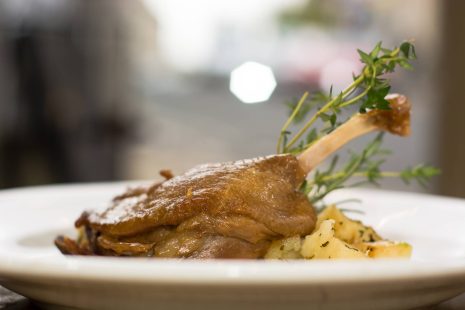
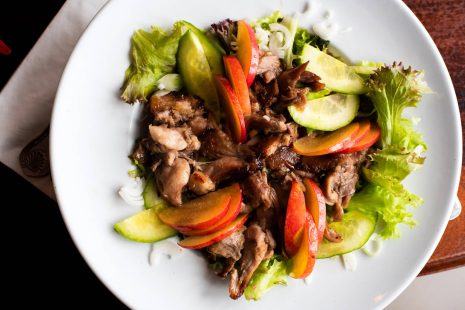
Warm Duck Confit Salad
Peter Jacobs
This dish is a great summer treat. Duck Confit Salad is a real taste of France which can easily be prepared with the minimum of fuss which will either wow dinner party guests or simply be enjoyed yourself.
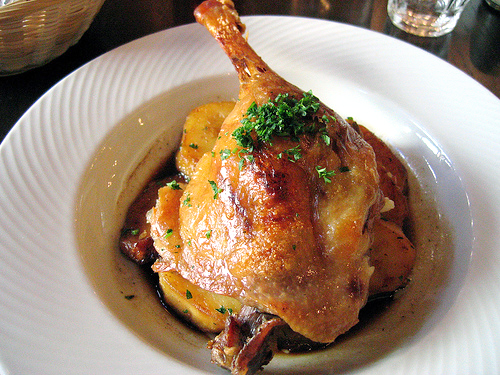
Duck confit is one of the most iconic dishes in French cuisine. Known for its rich flavour, tender texture and centuries-old heritage, it has become a favourite among food lovers seeking an authentic taste of France.
Although duck confit is often found on the menus of fine restaurants and French bistros, many people are unsure exactly what it is or how it differs from roast duck. The answer lies in a traditional cooking method that transforms a simple duck leg into something truly special.
This guide explains everything you need to know about duck confit, including its history, production, flavour and why it remains one of France’s most celebrated gourmet foods.
The word confit comes from the French verb confire, meaning “to preserve.”
Traditionally, confit referred to a method of preserving food by slowly cooking it and storing it in fat, sugar or syrup. In the case of duck confit, duck legs are cured with salt and then slowly cooked in duck fat.
Before refrigeration existed, this technique allowed families in rural France to preserve meat for long periods while enhancing its flavour and texture.
Today, duck confit is prized as a delicacy rather than simply a preservation method.
Traditional duck confit is made using:
The legs are carefully cured before being slowly cooked until tender.
The simplicity of the ingredients is part of what makes duck confit so special. The focus is on quality duck and traditional craftsmanship rather than complicated recipes.
Authentic duck confit follows a process that has remained largely unchanged for centuries.
The duck legs are rubbed with salt and often seasoned with:
The curing process draws out moisture and develops flavour.
After curing, the duck is slowly cooked in rendered duck fat at a low temperature for several hours.
This gentle cooking process creates:
The duck becomes so tender that it can often be pulled apart with a fork.
Historically, the cooked duck was stored beneath a protective layer of duck fat.
This helped preserve the meat for weeks or even months before refrigeration became available.
Modern duck confit is typically vacuum-packed or sealed for freshness.
Duck confit originates in southwest France, particularly the regions of:
These regions are famous for duck farming and have produced some of France’s most celebrated foods for generations.
Duck confit remains a cornerstone of the area’s culinary identity and is still prepared according to traditional methods.
Duck confit has a rich and distinctive flavour.
Many people describe it as:
The slow cooking process concentrates the natural flavour of the duck while creating a luxurious texture.
When reheated correctly, the skin becomes crisp and golden, providing a wonderful contrast to the soft meat beneath.
The secret lies in the cooking method.
Cooking slowly in duck fat allows connective tissues within the meat to break down gradually without drying out.
The result is:
This is one of the defining characteristics of authentic duck confit.
Duck confit is celebrated because it combines:
Although it began as a practical preservation technique, it is now regarded as one of the great dishes of French gastronomy.
Its reputation has spread far beyond France, making it a favourite among chefs and gourmet food enthusiasts worldwide.
While both dishes use duck, they are prepared very differently.
| Duck Confit | Roast Duck |
|---|---|
| Salt-cured before cooking | Usually cooked fresh |
| Slowly cooked in duck fat | Roasted in an oven |
| Extremely tender texture | Firmer texture |
| Rich and savoury flavour | Lighter flavour profile |
| Traditionally preserved | Not preserved |
Duck confit generally offers deeper flavour and greater tenderness.
Yes.
Most ready-made duck confit is fully cooked before purchase.
To serve it, simply:
This makes duck confit one of the easiest gourmet meals to prepare at home.
Duck confit is often served with simple accompaniments that complement its richness.
Popular choices include:
French chefs typically keep the presentation straightforward, allowing the duck to remain the star of the plate.
Duck confit pairs beautifully with medium to full-bodied wines.
Classic options include:
These wines balance the richness of the duck while enhancing its savoury flavours.
Absolutely.
Duck confit is a favourite for dinner parties because it offers:
It is also ideal for Christmas, celebrations and special occasions.
No. Traditional duck confit is fully cooked.
Most duck confit is made using duck legs.
The fat preserves moisture, develops flavour and creates tenderness.
Yes. Duck confit freezes very well when stored properly.
Yes. It is one of the most famous dishes from southwest France.
The best method is to heat it in the oven until warmed through and the skin becomes crisp.
Duck confit is one of the great treasures of French cuisine. Made by curing duck legs and slowly cooking them in duck fat, it delivers a combination of rich flavour, tender texture and culinary heritage that few dishes can match.
Whether enjoyed in a traditional French bistro, served at a dinner party or prepared at home for a special meal, duck confit offers a genuine taste of France and a reminder that some of the world’s finest foods come from the simplest ingredients and the oldest traditions.