
How To Eat Caviar: A Step-By-Step Guide
Caviar is a little spoonful of luxury that makes any occasion feel special. If you’ve ever wondered how to eat caviar like a seasoned gourmand, you’re in the right place. Whether you’re a caviar connoisseur or a curious newbie, this guide will walk you through everything you need to know — from the right utensils and serving temperature, to pairing it with blinis and drinks, and even how your approach might change depending on whether you’re enjoying Beluga, Oscietra, or Sevruga.
We’ll also cover the etiquette for eating caviar in a restaurant, and some common mistakes to avoid, so that even a beginner can appreciate caviar like an expert. So, grab your blinis and bubbly and let’s make your next caviar tasting a truly unforgettable event!
How To Eat Caviar Properly At Home
Eating caviar is an indulgent experience that requires a bit of finesse to fully appreciate its luxurious qualities. Follow our step-by-step guide to master the art of caviar tasting.
Step 1: Choosing the Right Utensils
The right utensils preserve the delicate flavour of caviar. Traditional metal spoons can react with the caviar, imparting an undesirable metallic taste. Instead, use spoons made of mother-of-pearl, bone, horn, or even gold. These materials are inert and won’t affect the flavour of the delicate eggs.
Step 2: Serving Temperature
Caviar should be served chilled, ideally between -2 to 0°C (28-32°F). Proper temperature maintains the caviar’s texture and freshness. Too warm and it becomes mushy and loses its texture; too cold and it loses flavour. Freezing it can damage the eggs.
To keep it cool during serving, place the caviar on a bed of crushed ice.
Step 3: Opening the Tin or Jar
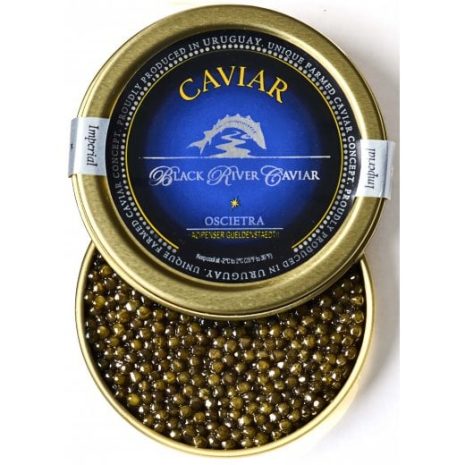
Use a caviar key or a small, blunt knife to carefully open the container. Avoid using excessive force which could crush the delicate eggs. The goal is to maintain the integrity of each bead.
Step 4: Presentation
Simple presentation allows the caviar’s flavour to shine without overwhelming it with other tastes. Traditional bases include blinis, toast points, or unsalted crackers — neutral carriers that let the taste of the caviar take centre stage. Add small dollops of crème fraîche for a creamy, slightly tangy counterpoint to the caviar. (We’ll cover the classic blini pairing in more detail below.)
Other classic garnishes include finely chopped red onion, hard-boiled egg (whites and yolks separated and finely chopped), and fresh chives or dill. These should be used sparingly to enhance rather than overpower the caviar.
Step 5: Tasting the Caviar
Proper tasting technique enhances the sensory experience, allowing you to appreciate the caviar’s full flavour profile. Begin with a small spoonful to truly appreciate the nuances. Some people recommend placing a small amount on the back of your hand between the thumb and index finger to warm it slightly before tasting.
Next, let the caviar rest on your tongue. Roll it gently around your mouth, feeling the eggs pop and release their flavours. Note the texture, which should be firm and not mushy, and savour the taste, which can range from briny and buttery to nutty and creamy.
Step 6: Pairing with Drinks
Appropriate beverages should complement the caviar’s taste and enhance the overall experience. Chilled vodka and dry Champagne are traditional choices. Vodka, served ice-cold and neat, has a clean taste that complements the caviar without overshadowing it. Champagne provides a crisp acidity that pairs beautifully with the rich, salty flavours of caviar.
Dry white wines, such as Chablis or Sauvignon Blanc, can also be excellent choices. Their acidity and minerality balance the flavours of caviar. Additionally, a fine sake with a clean, slightly sweet profile can be a delightful alternative that will harmonise the saltiness of caviar and refine your tasting.
Check out our post on what wines to serve with caviar for more inspiration!
Step 7: Avoid Common Mistakes
Knowing common pitfalls helps you avoid them and enjoy the caviar fully. As we said before, make sure you remember to avoid metal utensils, serve at the correct temperatures, and don’t overwhelm the caviar with strong-flavoured accompaniments.
Another common mistake is eating too much caviar at once! Caviar is best enjoyed in small amounts to appreciate its complex flavours. Take small bites and savour each one.
You should also cleanse your palate before tasting caviar to fully appreciate it, especially if tasting different types.
Handling caviar too much can damage the delicate eggs, causing them to burst and lose their texture. It’s best to scoop gently and avoid stirring or pressing down on the caviar.
By following these detailed steps, you will ensure that you and your guests can enjoy caviar at home in the best possible way!
Eating Caviar with Blinis
Blinis are the most traditional way to eat caviar, and for good reason. These small, soft pancakes — traditionally made with buckwheat flour — have a mild, slightly nutty flavour and tender texture that provide the perfect neutral base without competing with the caviar itself. Here’s how to eat caviar with blinis properly:
- Serve warm, but not hot. Blinis should be served warm or at room temperature — never piping hot, as heat can affect the caviar’s texture and flavour the moment it touches the blini. Keep your caviar chilled on ice until the last possible moment.
- Build each blini just before eating. Rather than assembling a platter of pre-topped blinis in advance, prepare each one as you go. This stops the caviar from sitting on a warm base and losing its delicate texture.
- Add a thin layer of crème fraîche first. A small dollop of crème fraîche between the blini and the caviar does double duty: it adds a creamy, tangy counterpoint to the caviar’s flavour, and it acts as a barrier that helps protect the delicate eggs from the blini’s warmth.
- Keep the caviar portion small. About half a teaspoon of caviar per blini is plenty — enough to experience its flavour and texture without overwhelming the blini.
- Eat it in one bite. This is where the magic happens — the soft give of the blini, the cool tang of the crème fraîche, and the pop of the caviar all come together in a single mouthful.
- Go easy on extra garnishes. With the blini and crème fraîche already providing texture and creaminess, any additional garnishes — finely chopped egg, onion, chives or dill — should be used sparingly. A small pinch is enough to add interest without overpowering the caviar.
Does the Way You Eat Caviar Change Depending on the Type?
The basic principles — chilled serving, gentle handling, non-metallic utensils, and small portions — apply to all caviar. But the three classic varieties, Beluga, Sevruga, and Oscietra, differ enough in grain size, texture, and flavour intensity that how you approach eating each one can vary too.
Eating Beluga Caviar
Beluga has the largest grains of the three, with a soft, silky texture and a delicate, buttery flavour with a long, gentle finish.
- Because its flavour is so subtle, Beluga is best enjoyed with minimal or no accompaniments at all — on its own, or with nothing more than a plain blini, so nothing masks its delicate notes.
- The eggs are exceptionally soft and can burst easily, so use an especially light touch when scooping and serving — even more so than with other types.
- As in Step 5, letting a small amount warm slightly on your tongue (or the back of your hand) before tasting helps its buttery character fully develop.
Eating Sevruga Caviar
Sevruga has the smallest grains of the three, a firmer texture with a distinctive “pop”, and a bold, briny, intensely flavoured profile.
- Because the flavour is so pronounced, a smaller spoonful than you might use for Beluga or Oscietra is often enough to make a real impression.
- Its boldness means it can stand up to slightly stronger accompaniments — a touch more crème fraîche won’t overwhelm it the way it might with a more delicate Beluga.
- If you’re tasting more than one type in a single sitting, save Sevruga for last so its intensity doesn’t overpower your palate for the others (see our tips below).
Eating Oscietra Caviar
Oscietra sits between the two: medium-to-large grains with a firmer “pop” than Beluga, in colours ranging from golden to dark brown, and a rich, nutty, complex flavour, often with fruity or earthy undertones.
- Its firmer texture and complex flavour pair particularly well with traditional accompaniments — blinis and a little crème fraîche complement its nutty notes nicely.
- Because its profile sits between Beluga’s delicacy and Sevruga’s intensity, Oscietra is often the best starting point if you’re tasting different types side by side, or simply want a balanced introduction to caviar.
Tips for Eating Caviar
- If you’re tasting different types of caviar, start with the milder varieties and progress to the more intense ones — see our notes above on how Beluga, Oscietra, and Sevruga differ. This allows you to appreciate the subtle differences in flavour and texture without overwhelming your palate.
- Plan on 1 to 2 ounces (30 to 60 grams) per person for a tasting.
- Before tasting caviar, cleanse your palate with a sip of cold, clean water to fully appreciate its flavours.
- If you have leftover caviar, store it properly to maintain its quality. Place a piece of plastic wrap directly on the surface of the caviar to prevent air exposure, then seal the container and refrigerate. Consume within a couple of days for the best taste.
How to Eat Caviar in a Restaurant
When you’re around friends, you don’t have to worry too much about how to eat caviar with proper etiquette. However, if you’re at a fine-dining restaurant, you might want to follow proper protocol.
First, remember moderation. Don’t eat too much when served caviar as an hors d’oeuvre, no matter how much you might be tempted by its delicious flavour. It’s considered gauche to eat more than about two spoonfuls. Restaurants typically provide non-metallic spoons, such as mother-of-pearl. If not, ask for one to avoid a metallic taste.
Second, don’t chew the caviar, as you will lose a lot of the flavour. Use your tongue to feel the beads of fish eggs and taste the buttery fat. Drink water or a mild beverage between bites to cleanse your palate.
Third, only take small bites of the caviar. It’s an expensive product, and it should be savoured and enjoyed, not scarfed down. Start with about half a teaspoon and really take your time over the experience of eating the caviar. To complement the caviar’s flavour, follow the restaurant’s recommendations for beverage pairings, such as Champagne or vodka.
Finally, if you are ever unsure about the proper way to eat caviar, feel free to ask the server or sommelier for guidance, and they will be happy to help. But, by following these etiquette tips, you will be well on your way to enjoying a refined and enjoyable caviar experience in a restaurant setting.
Et voilà!
The art of eating caviar properly might sound complicated on the surface, but with these tips and tricks up your sleeve — including how to make the most of the classic blini pairing, and how to adjust your approach for Beluga, Oscietra, or Sevruga — you’ll be a master in no time.
When using the right utensils, serving it at the correct temperature, and savouring each bite slowly, you can fully appreciate the luxurious flavours and textures that caviar offers. Now that you’re a pro and can show off your expertise, why not host a dinner party centred around caviar? We’ve got a post dedicated to easy caviar dishes you should try. If you’re not sure which type of caviar to choose, check out our ultimate guide to caviar types.