Salmon Caviar vs Sturgeon Caviar
Sturgeon caviar carries centuries of prestige. Beluga, Osetra, Sevruga. Names whispered in European courts and Russian palaces. It’s what people picture when someone says “caviar” without qualification. The kind served on mother of pearl spoons at weddings and galas.
Salmon caviar has a different story. It belongs to Japanese izakayas, Russian zakuski tables, and Scandinavian smorgasbords. Less about ceremony, more about generosity. You’ll find it piled on rice bowls, stuffed into sushi rolls, heaped on blinis with sour cream.
The choice between them isn’t about which is “better”. It’s about understanding what each does well and when to use which.
Here’s what separates them.

What Is Sturgeon Caviar?
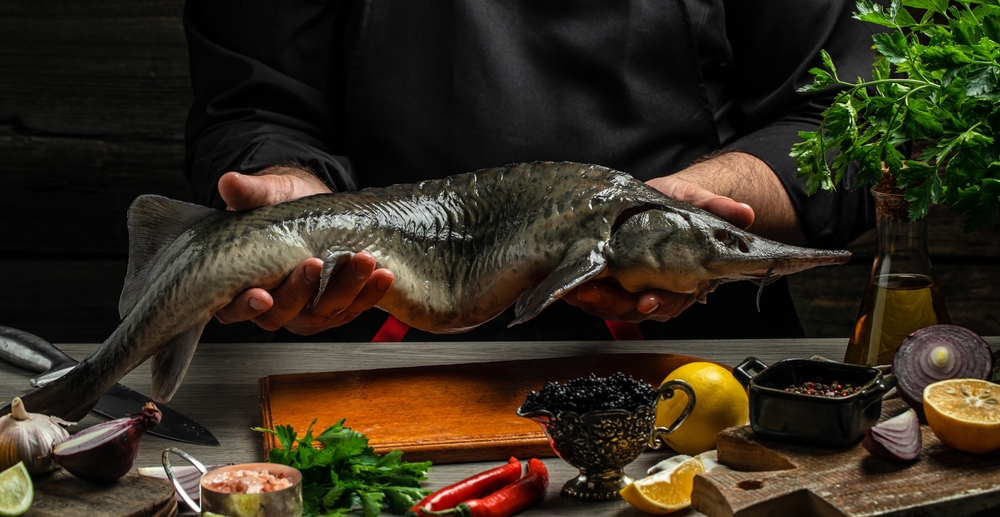
Sturgeon caviar has many varieties that are based on sturgeon species: Beluga, Oscietra and Sevruga. These fish take 8 to 20 years to mature before producing roe. That timeline alone explains much of the cost.
The eggs vary by species. Beluga produces large, pale grey pearls. Osetra ranges from golden to dark brown. Sevruga is smaller and silvery. Each has distinct flavour profiles, but all share a certain delicacy and complexity.
Most sturgeon caviar sold in the UK now comes from farms. Wild stocks are endangered. CITES regulations control trade tightly. Farming has helped stabilise supply, but production remains slow and expensive.
Sturgeon caviar is what set the standard. Everything else gets compared to it.
What Is Salmon Caviar?
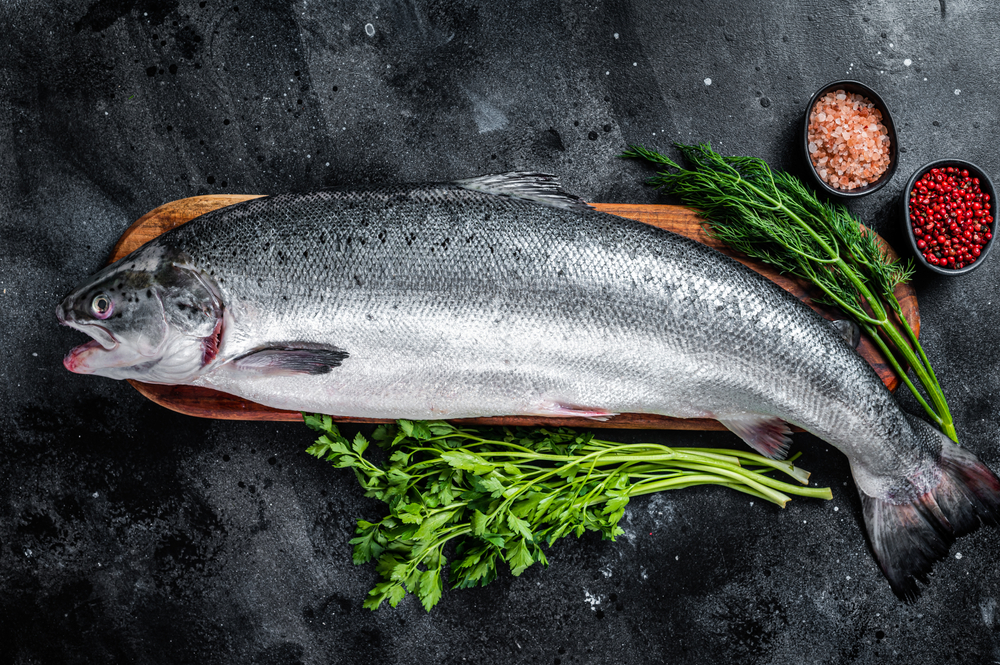
Salmon caviar (ikura in Japanese) comes from several Pacific salmon species: chum, coho, king, and sockeye. Each produces slightly different roe, but all share certain characteristics: large eggs, bright orange colour, and a distinct pop when you bite down.
Salmon mature much faster than sturgeon, usually 2 to 4 years. They produce roe in larger quantities. Wild salmon fisheries in Alaska and the Pacific Northwest harvest roe during spawning runs. Farmed salmon also contribute to supply.
The eggs are big, 5 to 7 mm across, larger than most sturgeon varieties. The colour ranges from pale orange to deep red depending on the species and diet of the fish.
Salmon caviar has strong ties to Japanese, Russian, and Scandinavian cuisines. It’s less about formal dining and more about bold flavour and generous portions.
How They Differ:
| Sturgeon Caviar | Salmon Caviar | |
| Taste | Complex, creamy, nutty, buttery. Subtle marine notes | Bold, briny, slightly sweet. Clean fish flavour |
| Texture | Medium to large eggs (2–4 mm). Gentle pop | Large eggs (5–7 mm). Firm pop, juicy burst |
| Appearance | Varies: pale grey, golden, dark brown, silvery | Bright orange to deep red. Translucent |
| Price (UK retail) | £120–£500+ per 100g | £15–£40 per 100g |
| Availability | Limited. Seasonal. Often requires specialist suppliers | Widely available. Most fishmongers and high end supermarkets |
| Best Uses | Formal dining, canapés, garnish for refined dishes | Sushi, rice bowls, blinis, casual entertaining |
| Sustainability | Mostly farmed. Wild stocks endangered | Wild Alaskan sustainable. Farmed available |
Flavour
Sturgeon caviar is subtle and layered. Beluga has a creamy, almost buttery quality with delicate marine notes. Osetra brings nuttiness, sometimes hints of hazelnut or even fruit. Sevruga is sharper, more mineral. The flavour unfolds slowly. You notice different notes as the eggs dissolve on your tongue.
Salmon caviar is direct and bold. Briny, slightly sweet, with a clean fish flavour that doesn’t hide. The taste hits immediately. The eggs burst and flood your mouth with flavour. There’s no mystery to it. You know exactly what you’re eating.
Some people find salmon caviar too assertive. Others love the intensity. It depends on what you want from your caviar. Sturgeon whispers. Salmon shouts.
In practice, this affects pairing. Sturgeon caviar works with delicate flavours: crème fraîche, blinis, champagne, scrambled eggs cooked gently in butter. It complements without overwhelming.
Salmon caviar holds its own against stronger flavours. Soy sauce, wasabi, pickled ginger, rice vinegar, sesame oil. It’s built for Japanese and Korean cuisine where bold, contrasting tastes matter.
Texture
Texture is where these two diverge most dramatically.
Sturgeon caviar pops gently. The eggs yield under light pressure, releasing their flavour in a soft burst. High-quality Beluga and Osetra have a silky, almost creamy mouthfeel. The experience is refined, controlled, delicate.
Salmon caviar pops firmly. The eggs have thick membranes that require actual bite force. When they burst, they release a flood of liquid. The sensation is juicy, almost explosive. Some describe it as playful or fun. Others find it too aggressive.
This textural difference changes how you experience the caviar. Sturgeon feels luxurious and restrained. Salmon feels generous and abundant.
For cooking, these textures behave differently. Sturgeon caviar is fragile. Heat destroys it. You add it at the last moment, as a cold garnish. Salmon caviar is hardier. It holds up better when mixed into warm rice or placed atop hot dishes, though we’d still suggest serving it cold.
Appearance
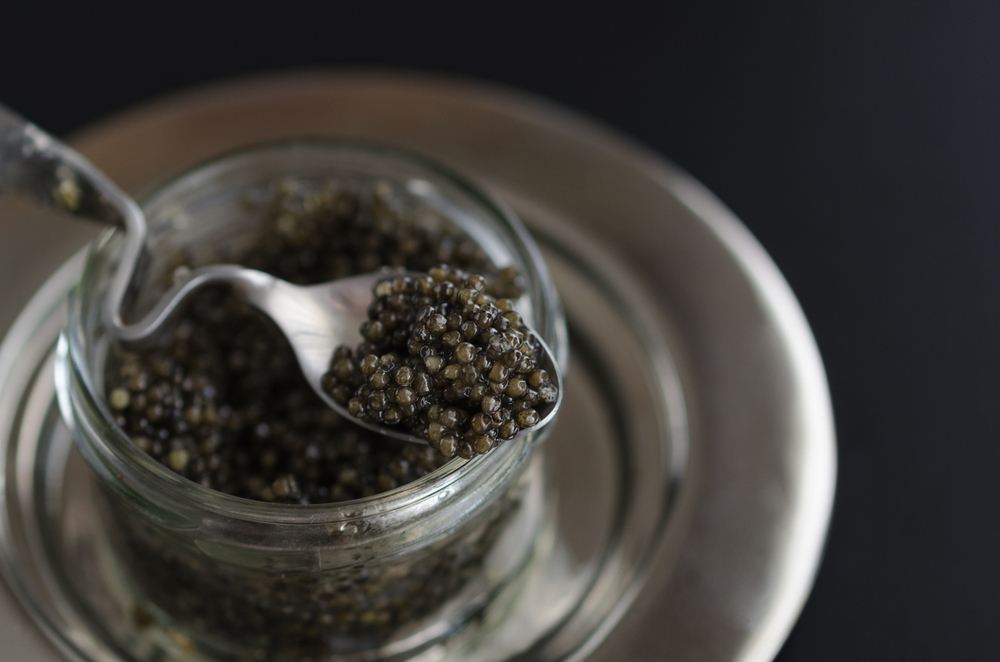
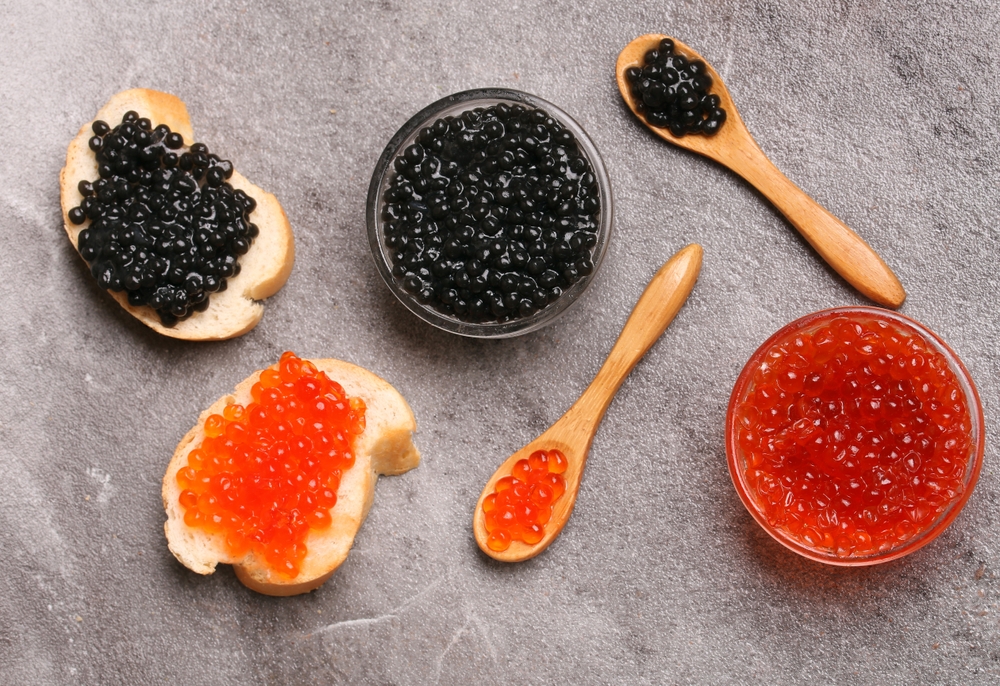
Sturgeon caviar varies in colour. Beluga ranges from pale grey to almost white. Osetra spans golden yellow to dark brown. Sevruga is silvery grey. The eggs have a subtle sheen, almost matte compared to salmon. This variety lets you choose based on presentation. Pale Beluga looks striking against dark bread or pottery. Golden Osetra brings warmth to a plate. Dark Sevruga creates contrast against cream or white china.
Salmon caviar is unmistakably orange. Bright, glossy, translucent. The eggs catch light. They glow. On a white plate or atop white rice, they create instant visual impact.
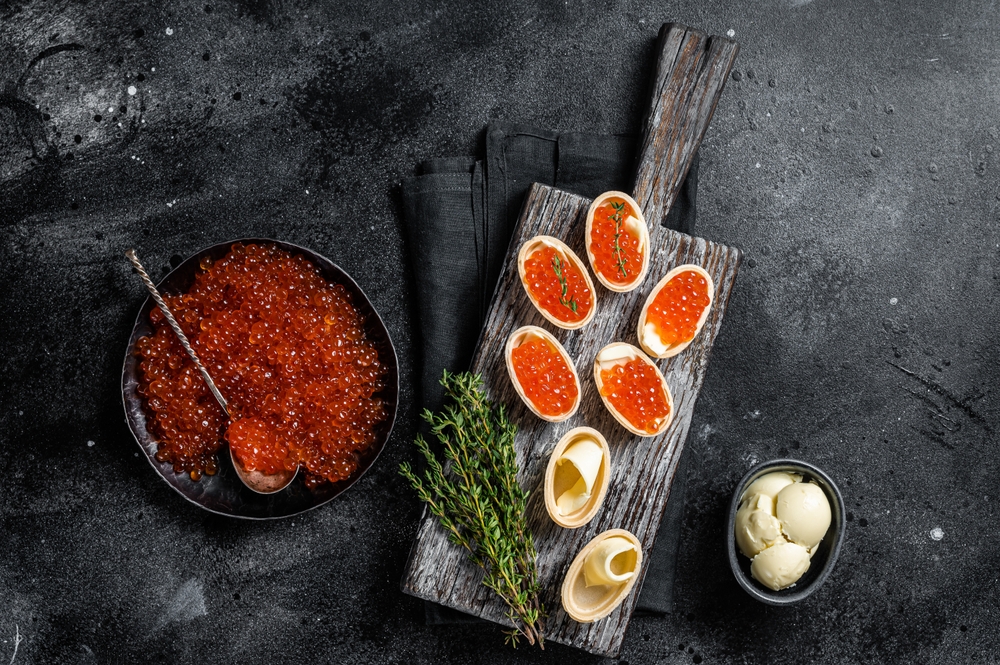
The difference matters for plating. Sturgeon caviar is elegant and understated. It fits formal presentations where restraint is the goal. Salmon caviar is bold and colourful. It makes dishes look vibrant and abundant.
Price
Sturgeon caviar is expensive, with prices starting often at £120 to hitting over £500 per 100 grams in the UK. Beluga sits at the top end. Osetra and Sevruga cost less but still command premium prices. At these prices, sturgeon caviar gets used sparingly. A teaspoon per serving. A small garnish. You calculate portions carefully.
Salmon caviar costs £15 to £40 per 100 grams. Good quality wild Alaskan ikura sits around £25 to £30. This price point changes how you use it.
You can serve salmon caviar generously. A tablespoon on sushi. A heap on a blini. Enough for guests to enjoy freely without you worrying about the cost. It transforms caviar from a precious garnish into an ingredient you actually cook with.
For entertaining, this difference is significant. Serving sturgeon caviar to ten people in meaningful portions costs £100 or more. Serving salmon caviar to the same group costs £30 to £50.
Availability
Serving Sturgeon caviar often requires planning. You may need to use specialist suppliers that require pre-orders due to limited stock. The best varieties sell out during peak seasons. You don’t casually pick up Beluga at the local shop.
Online retailers stock Osetra and Sevruga more reliably, but you’re still working with lead times and hoping your preferred variety is available when you need it.
Salmon caviar can often be found in the chilled section at most fishmongers. Waitrose and Ocado stock it. Specialist Japanese grocers have multiple varieties. If you want Salmon caviar, you can purchase it and serve it on the same day.
This accessibility makes salmon caviar practical for spontaneous entertaining or regular use. No advance planning required.
Seasonality
Sturgeon caviar follows traditional harvest cycles. The best batches arrive in autumn and winter, with peak quality in late winter. Farms time their harvests around these periods to match market demand.
Salmon caviar aligns with salmon spawning runs. Wild Alaskan salmon produce roe primarily from late summer through autumn, roughly July to October. This is when fresh, wild-caught ikura hits the market.
Farmed salmon provide year-round supply with less seasonal variation. Norwegian and Scottish farms can time harvests to meet demand throughout the year.
For planning purposes, sturgeon caviar is a winter luxury. Salmon caviar is an autumn speciality with decent availability year-round.
Sustainability
Wild sturgeon are critically endangered. Overfishing in the 20th century decimated Caspian and Black Sea populations. CITES now regulates sturgeon trade strictly. Wild-caught sturgeon caviar is essentially off the market.
Modern sturgeon caviar comes from aquaculture. Some farming operations have achieved genuine sustainability. Others are less transparent. Make sure to check certifications and sourcing details before buying.
Wild salmon populations vary by region. Alaskan salmon fisheries are often considered some of the best-managed in the world. The Alaska Department of Fish and Game uses strict quotas based on escapement counts to ensure healthy spawning populations.
Pacific Northwest salmon face more pressure from habitat loss, dams, and climate change. Wild salmon from these waters require more scrutiny.
For sustainability, wild Alaskan salmon caviar is the clearest choice. Farmed sturgeon from reputable European producers comes second. Farmed salmon sits third, with quality varying by farm and country.
Storage
Both caviars are perishable and temperature-sensitive. Store at 0 to 4°C. The coldest part of your fridge, usually the back of the bottom shelf.
Unopened tins last several weeks if kept properly cold and sealed. Once opened, consume within 2 to 3 days. Air exposure degrades quality quickly.
Sturgeon caviar is particularly delicate. The eggs lose their texture and the flavour turns flat if mishandled. Temperature fluctuations damage the roe. Take the tin out of the fridge just before serving, not an hour ahead.
Salmon caviar is slightly hardier. The thicker egg membranes provide more protection. It tolerates brief temperature changes better than sturgeon. Still, treat it carefully. Keep it cold until you’re ready to serve.
Bon Appetit!
Sturgeon and salmon caviar aren’t competing for the same role. They’re different ingredients with different strengths.
Sturgeon offers complexity, tradition, and delicacy. It’s caviar as ritual, as refinement, as centrepiece. The cost and rarity are part of what makes it special.
Salmon offers boldness, versatility, and abundance. It’s caviar as ingredient, as generous topping, as everyday luxury. The accessibility is part of what makes it work.
The best caviar for your table depends on what you’re serving, who you’re feeding, and what you want the experience to feel like.
Know the difference. Choose accordingly. Enjoy both when the moment’s right.